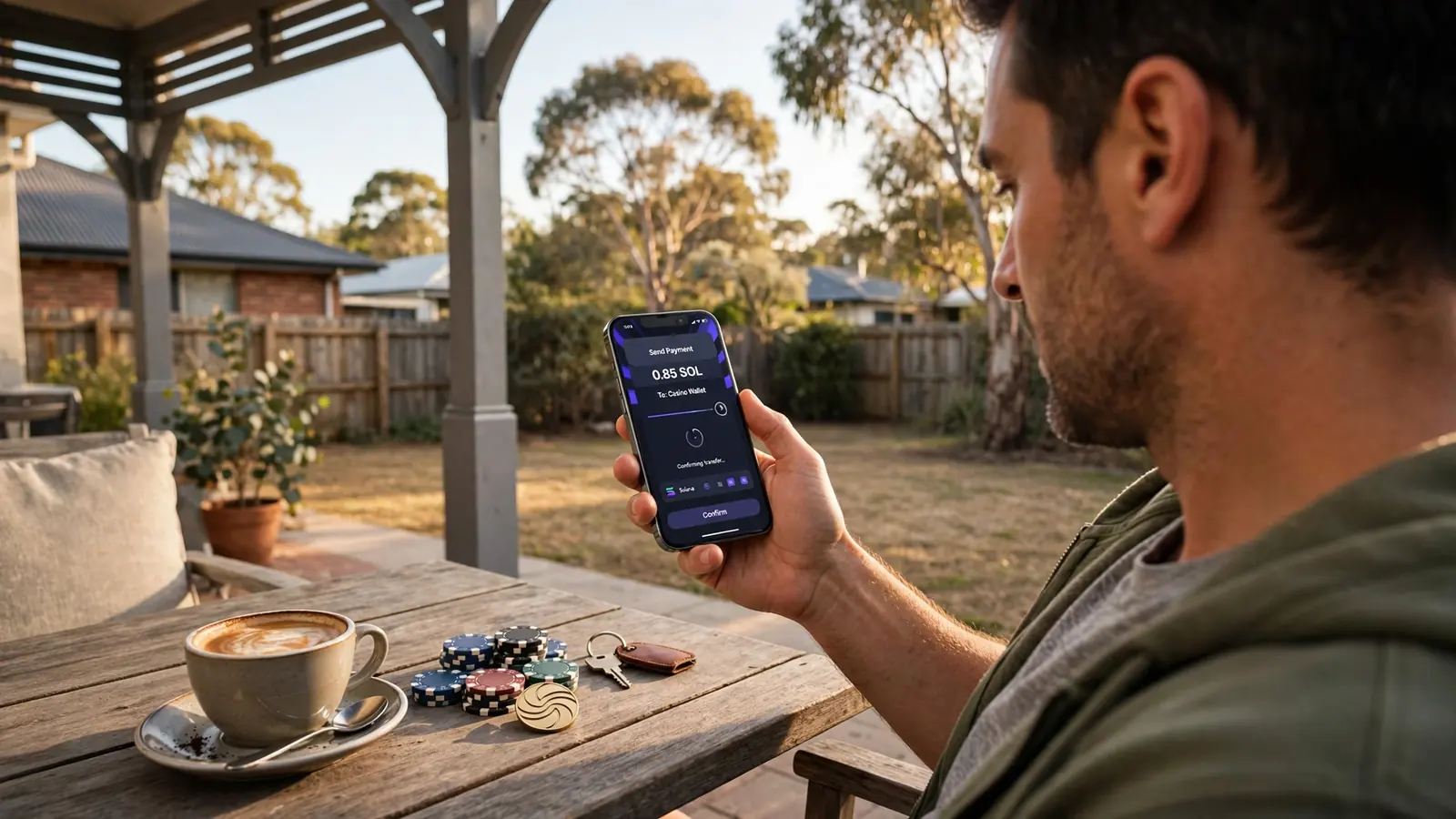
Ethereum Casinos in Australia: What ETH Claims Mean
 Available in AU
Ethereum payment options do not establish Australian legality; the article explains how to assess operator, account, bonus and transaction claims.

Table of Contents
- Ethereum Casinos Online: The Australian Context
- How to Read “Best Ethereum Casino” Claims
- What “Best” Can—and Cannot—Tell You
- Bonus and Deposit Terms: Read the Conditions Carefully
- Ethereum and Casino-Game Search Terms
- Before You Play: Verification and Account Checks
- What “Accepts ETH” Means for Australian Searchers
- Ethereum Deposits and Withdrawals: What the Claims Say
- Live-Dealer and Crypto Search Terms
- Slot-Related Search Terms and Their Limits
Ethereum Casinos Online: The Australian Context
An online casino does not become lawful for Australians simply because its cashier mentions Ethereum. The relevant issue is not whether a service uses digital currency, a website or a mobile interface. It is whether an operator is offering real-money online casino games to people in Australia.
The Interactive Gambling Act 2001 prohibits operators from providing those games to people physically located here. That covers casino-style services, whether the game is presented as a table game or something else. Ethereum does not create an exception. Nor does calling a service an online casino, a live casino or a mobile casino change the legal position.
That distinction matters because a web page can be written to sound local without being authorised to serve Australians. References to Australia, Australian dollars or a familiar payment method are not proof that an operator may lawfully offer casino games here. The same goes for a claim that a site accepts ETH. A payment option and permission to provide the underlying gambling service are separate things.

The Act places the prohibition on operators. It does not explicitly make it a criminal offence for an individual to use an offshore site. That is not the same as saying that using one is protected, endorsed or free of practical risks. The Australian Communications and Media Authority, or ACMA, administers enforcement of the Act. Offshore casino services are subject to blocking and enforcement measures, so a site’s apparent availability at one moment should not be mistaken for a dependable or lawful local service.
I keep the distinction simple: the law’s target is the operator providing prohibited services to people here, not a player’s choice of cryptocurrency. Swapping a bank-linked payment for Ethereum does not move the operator outside the Act. A casino branded around ETH is still an online casino if it offers real-money casino games.
There is another point that tends to get lost in glossy claims: Australian consumer law does not protect players who use offshore casinos. If a dispute arises over an account, a balance or a service, you should not assume that the consumer protections available for ordinary Australian transactions will apply. A polished interface or Australian-facing wording cannot supply that protection. It is a poor substitute.
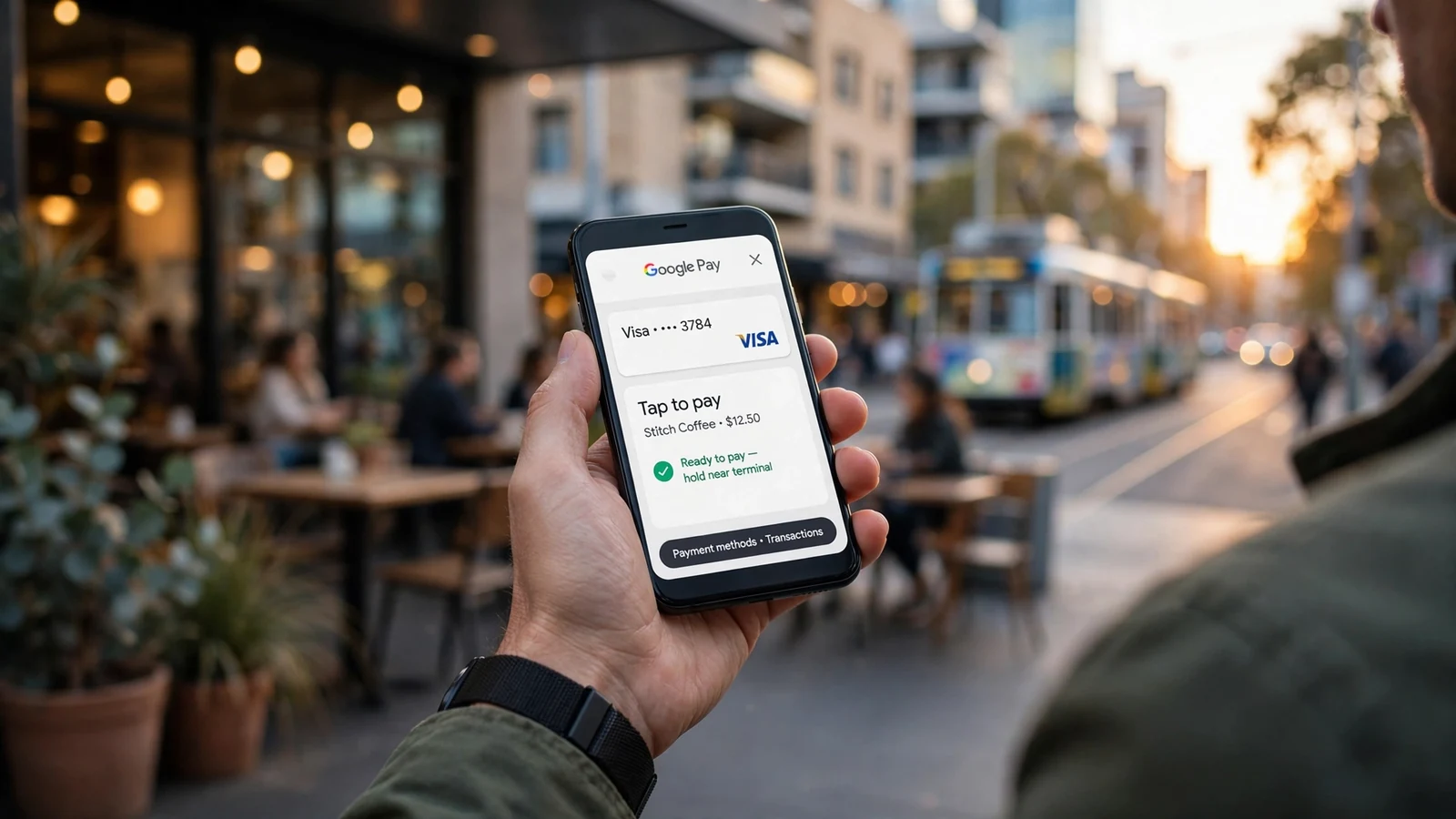

This is why phrases such as “Ethereum casino in Australia” can be misleading when read as a statement of legal status. They may describe what a page claims to offer or whom it hopes to attract. They do not establish that the service is permitted to provide online casino games to Australian residents. Search results, advertisements and operator pages are not legal determinations.
The same principle applies across devices and game formats. A service does not become permissible because it is accessed on a phone, described as live, or framed as a local version of an offshore product. The legal question remains the provision of real-money online casino games to people in Australia. The technology is beside the point.
It is also worth separating the person’s legal position from the practical position. The Act does not explicitly criminalise players for using offshore sites, but access to such services can be disrupted by enforcement. And without Australian consumer-law protection, a player may have limited practical recourse if something goes wrong. Neither point turns an offshore service into a safe local option.
When you encounter an ETH-related casino claim, read it as a description of a payment feature, not as evidence of permission to operate here. A claim about currency cannot answer the legal question. The Act does.
That is the Australian context: operators are prohibited from offering real-money online casino games to people here; ACMA is the regulator responsible for enforcing the Act; and players using offshore services do not receive Australian consumer-law protection. Ethereum changes none of those points. No workaround.
How to Read “Best Ethereum Casino” Claims
“Best” is a verdict, not a useful description on its own. A page calling something the best online Ethereum casino may be expressing an opinion, summarising a particular set of criteria or simply using confident wording to attract attention. The word does not tell you which of those is happening.
- Look for a stated method behind the claim
- Examine if the page explains why measures matter
- Treat broad praise as a prompt to examine statements
- Rely on a row of stars or a bold label
- Assume “best” establishes an operator is reliable
- Use a single winner to settle different user priorities
I’d start by looking for the standard behind the claim. Does the page explain what it assessed, and why those measures matter? A clear explanation is more informative than a row of stars or a bold label. If there is no stated method, “best” is just the page’s own description. It does not establish that an operator is reliable, suitable for you or even available to you.
“Best” can also hide competing priorities. One person may care most about a familiar interface; another may care about account terms or how a service handles personal information. A single winner cannot settle those different questions for every reader. Treat broad praise as a prompt to examine the underlying statements, not as a substitute for doing so.
“Online” does not make a claim more specific
Adding “online” may sound like extra detail, but it still leaves the important questions unanswered. A phrase such as “best online casino with Ethereum” does not, by itself, show who made the assessment, what was checked or whether the description is current. Nor does “best Ethereum casino site” prove that the site’s claims have been independently tested.
Pay attention to the difference between an assertion and its support. “We consider this the best” is an opinion. “It meets these stated criteria” is a claim about a process, which you can then examine. Neither wording guarantees a good outcome, but the second gives you something concrete to assess. If the explanation never goes beyond praise, there is little to weigh.


Be wary of rankings that provide no meaningful reason for the order. A numbered position can look precise while revealing nothing about how the ranking was made. The same goes for labels such as “top choice” or “leading site”: they are descriptions, not proof.
Separate the headline from the details
When a page makes a strong claim, check whether the details support the impression it creates. Read the wording carefully: is it describing a verified feature, repeating what an operator says, or offering the page’s own judgement? Those are different kinds of statements. A confident headline can blur them together.
Also notice what the claim leaves out. A page may praise an operator without explaining its assessment criteria or the limits of its review. That omission does not prove the claim false, but it means the praise carries less weight. I would rather see a modest statement with a clear basis than a sweeping verdict with none.
Descriptions such as “best online pokies with Ethereum” need the same caution. The phrasing does not establish that a particular service or game is available, appropriate or lawful for people in Australia. This guide does not recommend or promote online casino services. The wording of a promotional claim cannot change that boundary.
There is a separate practical point worth keeping in view: Australian consumer law does not protect players who use offshore casinos. A glowing review should not be mistaken for that protection. That is a serious difference, not fine print.
Attention: Australian consumer law does not protect players who use offshore casinos, and a glowing review is not a substitute for that protection.
What a claim can tell you
At most, a “best” label tells you that someone is presenting a positive assessment. Its value depends on who is making it, what they assessed and whether they explain their reasoning. If those pieces are missing, do not fill the gaps with assumptions. A polished page can still be short on useful evidence.
You do not need to accept or reject every claim at first glance. You can simply place it in the right category: opinion, supported assessment, or unsupported promotion. That small distinction helps keep persuasive wording from doing the thinking for you. It also prevents a general compliment from being mistaken for a guarantee about an individual service.
When a claim names a particular feature, check that feature separately rather than assuming the “best” label confirms it. And when a page offers no clear basis for its judgement, there is no need to treat its ranking as a result you must act on. Keep the wording in perspective. “Best” is not a finding by itself.
What “Best” Can—and Cannot—Tell You
If you’re looking for an Australian casino option for Ethereum, check that ETH deposits and withdrawals are currently available and review the relevant terms before you sign up. This list gives you a concise reference to the details provided for each operator.
Payout speed: crypto ~90 minutes, fiat 1-5 days · Min. deposit: A$30 Kingmaker lists a A$30 minimum deposit. Its stated payout times are around 90 minutes for crypto and 1–5 days for fiat.
License: Curacao Gaming Control Board OGL/2023/176/0095 (Hollycorn N.V.) Neospin is listed with a Curacao Gaming Control Board licence, OGL/2023/176/0095, held by Hollycorn N.V.
License: Curacao eGaming (Hollycorn N.V., since 2017) · Min. deposit: A$20-30 (depends on the offer) Playfina Casino is listed as licensed by Curacao eGaming under Hollycorn N.V., which has operated since 2017. Its minimum deposit is A$20–30, depending on the offer.
License: Curacao · Min. deposit: A$20 (POLi) Lucky Dreams is listed with a Curacao licence and a A$20 minimum deposit via POLi.
License: Curacao Gaming Control Board OGL/2023/174/0082 (Dama N.V.) SpinsUp is listed with a Curacao Gaming Control Board licence, OGL/2023/174/0082, held by Dama N.V.
License: Curacao eGaming (Roby Games Ltd) Roby Casino is listed as licensed by Curacao eGaming under Roby Games Ltd.
License: Curacao eGaming OGL/2024/923/0383 (Antillephone N.V.) · Min. deposit: A$30 WinSpirit Casino is listed with a Curacao eGaming licence, OGL/2024/923/0383, held by Antillephone N.V. Its stated minimum deposit is A$30.
Payout speed: crypto 30-120 minutes, fiat 24-72 hours · Min. deposit: A$30 MrPacho lists a A$30 minimum deposit. Its stated payout times are 30–120 minutes for crypto and 24–72 hours for fiat.
License: Curacao Golden Pokies is listed with a Curacao licence. The supplied details do not specify its deposit minimum or payout times.
License: Curacao (operating since 2017) · Min. deposit: A$20 Uptown Pokies is listed with a Curacao licence, has operated since 2017, and states a A$20 minimum deposit.
“Best” is a judgement, not a fact you can check on its own. A page using that label may reflect its publisher’s priorities, but the word does not establish that an operator is genuine, that its information is current or that it is suitable for you. The same caution applies whether the claim concerns an Ethereum casino generally or one aimed at Australian readers.
I treat the label as a prompt to ask what is being judged. Is the page comparing payment options, describing an operator’s features or simply repeating a promotional claim? If it does not make its basis clear, there is little to assess. A confident heading cannot fill in the gaps.
The word “best” also shifts meaning with the subject attached to it. A claim about a casino site is not automatically a claim about its games, and a page describing a “latest” option may only be saying that its own information was recently updated. Neither phrase proves that a service is available to Australians or that its claims have been independently checked. Search wording is not evidence.


A label is not verification
Before relying on an evaluative claim, look for details that can be checked rather than praise that cannot. Does the page identify who operates the service? Are its statements specific and consistent? Can you tell when the information was reviewed and what it is based on? These questions do not turn a promotional page into an endorsement; they help you see what the label leaves unanswered.
A list of sites can look more decisive than a single recommendation, but the format does not prove that the entries were assessed on equal terms. Nor does inclusion establish that a listed service is lawful for someone in Australia. A name appearing in a list is only a name appearing in a list.
That distinction matters here. Under the Interactive Gambling Act 2001, operators cannot provide real-money online casino games to people physically located in Australia. The Australian Communications and Media Authority enforces the Act. Describing a service as the best option for Australians does not change that restriction or make the service suitable for use here.
Australian consumer law does not protect players who use offshore casinos. That is a practical point, not a reason to treat a prominent ranking as a safety check. A polished page can still leave important questions unanswered. Convenient-looking claims deserve scrutiny.
Under the Interactive Gambling Act 2001, operators are prohibited from providing real-money online casino games to people physically located in Australia.
Keep the judgement in proportion
You may come across praise framed around Ethereum, a site, or a general casino experience. Read each statement narrowly: it says something about the publisher’s view, not necessarily about your circumstances. “Best for Australians” is not proof of local permission, reliable service or recourse if something goes wrong.
I would also separate an opinion from a verifiable description. “Easy to use” is subjective; a named feature or clearly stated policy is something you can compare with the operator’s own information. Even then, checking a claim does not make the underlying service lawful to provide in Australia. Keep those questions separate.
The same discipline applies when a page calls something the best choice for games or pokies. The wording does not establish what is offered, whether it is available to you, or whether it may lawfully be provided to Australian residents. There is no need to infer more from a superlative than it actually says.
So, if a page calls an Ethereum casino the best, take that as an opinion to examine—not a finding that settles identity, terms or suitability. A ranking can organise a publisher’s view. It cannot decide whether using an offshore casino is protected under Australian consumer law, and it cannot override the rules governing online casino services in Australia.
Bonus and Deposit Terms: Read the Conditions Carefully
A bonus label can sound like a straightforward offer: a welcome bonus, extra credit after a deposit, or a promotion described as “no deposit”. But wording alone does not establish that an offer exists, that it applies to you, or that it can be used by someone in Australia. Treat it as a claim to scrutinise, not an invitation.


The same caution applies when Ethereum appears beside bonus language. A page may pair ETH with a deposit promotion or describe a bonus as available without a deposit. Those phrases do not tell you whether the terms are current, who qualifies, or what restrictions apply. Nor do they prove that the service may lawfully provide online casino games to people in Australia. A polished label is still only a label.
If you encounter promotional terms, look for the full conditions rather than relying on a headline. Check what the wording says about eligibility, the payment method involved, and any limits on using or withdrawing promotional credit. Pay attention to whether the terms distinguish between a cash deposit and a bonus balance. If a page does not make the conditions clear, you cannot safely infer them from the headline.
That distinction matters with “no deposit” language in particular. It describes a claimed promotion, not proof that no payment, account step, or other condition is involved. Likewise, “welcome bonus” does not tell you what a new customer must do to qualify. The details are in the terms, not in the name. Fine print doing heavy lifting is no surprise.
I would also separate a claim about a promotion from a claim about a payment method. Seeing Ethereum mentioned near a bonus does not establish that ETH is accepted, that a deposit would qualify, or that any promotional balance could be withdrawn. Each is a separate claim, and one does not verify the others. Do not treat nearby words on a page as evidence that all of them apply together.
How to scrutinise promotional terms
Check the full conditions for eligibility, payment methods, and limits on withdrawing promotional credit. Distinguish between a cash deposit and a bonus balance, and verify if the terms match the headline.
There is a more important Australian point behind these checks. Under the Interactive Gambling Act 2001, operators cannot provide real-money online casino games to people located in Australia. The Australian Communications and Media Authority enforces that law. Australian consumer law does not protect players who use offshore casinos, so an enticing promotion should not be mistaken for a protected local offer. That is a poor trade for a headline.
Promotional language can make a service sound accessible, but it does not change the legal position or establish that a claim is reliable. If you are assessing text you have already encountered, read it literally: identify what is being promised, what conditions are attached, and whether the wording leaves key points unresolved. When the headline says more than the conditions support, trust the conditions—or walk away.
Ethereum and Casino-Game Search Terms
When you see wording about casino games and Ethereum together, treat it as a description of what someone is looking for—not proof that a particular game exists or can be accessed from Australia. Adding ETH to a game name does not tell you who provides the service, what it offers, or whether it may legally serve people here.
I find it helps to separate three ideas that often get bundled together: a game, a payment method, and permission to provide a service. A page might mention Ethereum alongside casino-style games, but that wording alone does not confirm that Ethereum is accepted, that the games are available, or that the operator is allowed to offer them to Australian residents. One label does not settle the others.


The legal distinction matters. Under the Interactive Gambling Act 2001, providing real-money online casino-style games to people in Australia is prohibited. That covers familiar formats such as poker, blackjack and roulette, as well as other casino games. The restriction is directed at operators providing the service; it does not turn a game-related phrase into evidence that an Australian player has found a lawful local offer.
There is another practical point that is easy to miss: Australian consumer law does not protect you when you use an offshore casino. A polished page or a familiar game title does not change that. I would not take either as a substitute for knowing who is behind a service and what risks come with dealing with it. Not glamorous, but important.
Game wording can also be broad. A reference to casino games may not identify a specific title or format at all. Nor does a mention of a game establish that it is available to Australians. The same goes for anonymous-play language or a bonus mentioned beside a game: those phrases do not verify access, terms, or legality. They are claims to interpret, not assurances to rely on.
Keep the payment question separate from the game question. Seeing Ethereum named beside a casino game does not establish that it can be used for a transaction. And even a payment claim would not make the underlying casino service lawful for people in Australia. Two different questions. Easy to blur.
Legal Prohibition
Providing real-money online casino-style games, such as poker, blackjack and roulette, to people in Australia is prohibited under the Interactive Gambling Act 2001.
So, if a page links Ethereum with casino-style play, read it as a description of the subject being discussed, not a green light. I would avoid treating a game name, a payment reference, or promotional wording as proof of availability or protection. In Australia, the service itself is the key issue—not the currency named beside it.
Before You Play: Verification and Account Checks
An Ethereum payment claim does not mean you can open an account and start straight away. Online casinos typically require customers to complete a Know Your Customer (KYC) assessment before financial transactions. In practice, that means an account may need to be checked before money can move, even if a site’s wording makes access sound immediate.
KYC is an identity-checking process. A service may ask you to provide information or documents so it can confirm who you are. The exact steps depend on the operator, and a payment method does not bypass them. Seeing ETH mentioned on a page tells you nothing about whether an account has passed checks or whether a transaction will be permitted.
There is a more important Australian point to keep in view. Under the Interactive Gambling Act 2001, it is illegal for operators to provide real-money online casino games to people physically located in Australia. The law covers casino-style games such as poker, blackjack, roulette and pokies. A verification process does not make an offshore service lawful for Australians, and an account approval is not a sign that Australian consumer law protects you if you use such a service.

That distinction is easy to miss. Identity checks can sound like a mark of legitimacy, but they are an administrative step, not an Australian approval or a safeguard that changes the legal position. A page describing KYC is not proof that the service may offer online casino games here. Nor does the presence of an Ethereum option settle whether an account can be used from Australia.
If you encounter a request to verify an account, consider what information is being requested and who would receive it. Identity documents and personal details are sensitive; do not treat a polished registration screen as evidence that sharing them is risk-free. The service’s own procedures cannot provide the protections of Australian consumer law where that law does not cover your use of an offshore casino.
I would read any promise of instant access with care. The relevant question is not simply whether a site mentions ETH, but whether it is asking you to submit personal information to an offshore gambling service that is not permitted to provide real-money online casino games to people in Australia. Verification is not a green light.
What “Accepts ETH” Means for Australian Searchers
When you see a claim that a casino accepts ETH, it describes a payment option—not whether the service may legally offer casino games to people in Australia. The two ideas are easy to blur together, especially when a site presents a payment method as its main selling point. They are not the same thing.
The Interactive Gambling Act 2001 prohibits operators from providing online casino games to people in Australia. That includes services offered from offshore. The Australian Communications and Media Authority, or ACMA, oversees enforcement of the Act. A website’s willingness to take Ethereum does not change those rules or create permission to provide the games.
ACMA
The Australian Communications and Media Authority, which is the regulator responsible for administering and enforcing the Interactive Gambling Act 2001.
The law’s position on players is different: it does not explicitly make an individual player’s use of an offshore site a criminal offence. That distinction is not an endorsement, though, and it does not make an offshore service lawful for its operator to offer here. Australian consumer law also does not protect players who use offshore casinos. That matters if something goes wrong; a payment claim is no substitute for local consumer protections.
I’d read “accepts ETH” narrowly. It means the operator claims to support Ethereum as a payment method, subject to whatever terms and access controls it applies. It does not establish that the service is available to Australian residents, that its games can lawfully be offered here, or that the claim is current. The same applies if the wording says “crypto casino” or highlights mobile access: those labels describe features being claimed, not legal status.
A test or review of an Ethereum casino can help explain what a site says about itself, but it cannot override Australian law. Nor does a polished page, a familiar brand, or a working payment screen amount to approval by an Australian regulator. The payment method is one detail; the legal setting is another.
So, if you are trying to understand what “casino that accepts ETH” means in Australia, separate the payment claim from the question of permission. One is about how a service says it handles transactions. The other is about whether operators may provide real-money online casino games to people here. They should not be treated as interchangeable.

Ethereum Deposits and Withdrawals: What the Claims Say
Claims about Ethereum payments often emphasise speed and low cost. Cryptocurrencies such as Ethereum and Bitcoin can offer instant deposits and withdrawals with limited or no fees. That describes a payment feature, not a guarantee that every transaction will be instant or free. It also does not establish that a service accepting ETH is lawful or available to people in Australia.
A promise of an instant ETH deposit or withdrawal needs careful reading. “Instant” can sound like a complete answer, but the wording alone does not tell you what a particular service will do. Nor does “no fees” prove that every part of a transaction carries no cost. Treat these phrases as claims about payment handling, not as assurances about a specific casino or a reason to send funds.
The same distinction applies to requests for a casino with an Ethereum deposit or an instant withdrawal. A payment option says nothing about whether an operator may offer online casino games to Australians. The Interactive Gambling Act 2001 prohibits operators from providing real-money online casino games to people in Australia. The Australian Communications and Media Authority enforces that law. Australian consumer law does not protect people using offshore casinos.
I would not read a quick-transfer claim as a shortcut around those limits. The convenience described in payment language does not change the legal position, and an ETH label is not evidence of a lawful service. No magic in the wallet.
If you encounter a claim about fast Ethereum withdrawals, keep its scope narrow: it concerns the stated payment feature. It does not confirm an operator’s status, guarantee a particular transaction, or make an offshore casino a protected option for an Australian consumer. The practical distinction matters. Payment speed and permission to provide gambling services are separate questions, even when a page presents them side by side.
Key Payment Points
- “Accepts ETH” describes a payment feature, not legal permission to operate
- “Instant” withdrawals are claims about timing, not guarantees of service
- Payment convenience does not override the Interactive Gambling Act 2001
- Offshore casino users lack protection under Australian consumer law
So, “accepts ETH” and “instant withdrawal” are not interchangeable promises. One refers to a payment method; the other makes a claim about transaction timing. Neither tells you that an online casino can legally serve people in Australia.
Live-Dealer and Crypto Search Terms
Pairing live-dealer language with Ethereum or other crypto terms can make a result sound like a complete, ready-to-use service. It is only a combination of claims: one about a game format, another about payment. Neither confirms that a service is available to you, and the payment wording does not change the rules that apply to online casino games in Australia.
A live-dealer game is presented as involving a human dealer, rather than only a digital game interface. But seeing that description beside an Ethereum payment reference does not establish that the operator actually provides both features to Australian residents. Nor does it tell you whether the statements are current, whether they apply to your location, or what conditions an operator might attach. Search wording is not proof. A polished page is not proof either.
The legal distinction matters more than the label. Under the Interactive Gambling Act 2001, it is illegal for operators to provide real-money online casino games to people physically located in Australia. That includes casino-style table games. The Australian Communications and Media Authority enforces the Act. Adding a cryptocurrency payment option to a live-dealer offering does not make the underlying service lawful.
I would treat a page combining these terms as a set of statements to assess, not as an invitation or a recommendation. In particular, do not read a claim about Ethereum acceptance as evidence that a live-dealer casino may lawfully serve someone in Australia. Offshore services can also leave Australian consumers without the protections they would expect under Australian consumer law. That is a meaningful gap, not a footnote.

There is no need to untangle every variation in wording. “Crypto” may be used broadly, while “ETH” refers to Ethereum; neither term tells you anything reliable about the legality or availability of a live-dealer service here. The format and the payment method are separate details, and neither overrides the Australian restriction.
Keep the boundary clear: a description of a live dealer is not permission to access an online casino game from Australia. Different words, same rule.
Slot-Related Search Terms and Their Limits
People looking for Ethereum-related casino services may use wording that combines the cryptocurrency with pokies or other slot-style games. That wording describes what they hope to find; it does not show that a particular game or service is available to people in Australia.
The legal distinction matters. Under the Interactive Gambling Act 2001, operators cannot provide real-money online casino games, including slots, to people physically in Australia. A website’s description of itself as an Ethereum casino, or its mention of games that use that label, does not change that rule. Nor does an overseas licence make it lawful for an operator to provide prohibited services to Australian residents.

I’d also treat words such as “trusted” and “licensed” as claims, not proof. They may refer to an operator’s own description or to a licence issued elsewhere; neither tells you that Australian law permits the service. The name of a payment method is no shortcut around the legal position.
There is a practical point people can miss: Australian consumer law does not protect players who use offshore casinos. That leaves you without those consumer protections if something goes wrong. A polished site and familiar-looking payment language do not fill that gap.
So, if you encounter Ethereum-related wording alongside pokies or slot-style games, read it as a description of a prohibited online casino service, not as confirmation that you can legally access it in Australia. I keep the distinction plain: a search phrase is not permission.
What are the deposit and withdrawal limits at the best Amex casinos?
Limits are set by each casino and can vary. Check the casino’s cashier or payment terms for its Amex deposit and withdrawal limits.
How do you check if casino sites accept Amex deposits?
Check the casino’s cashier or payment-methods information for American Express. Some casinos do not accept Amex; where it is offered, you can select it in the cashier to make a deposit.
How long do Amex casino deposits take to process?
Amex casino deposits are processed instantly.
How safe is my money when using American Express at online casinos?
Using Amex does not make an offshore casino a protected local service. Australian consumer-law protections do not apply to players using offshore casinos, and access to those services may be disrupted.
Is it safe to use American Express for transactions at online casinos?
An Amex payment does not establish that an offshore casino is lawful or protected for Australian players. Australian consumer-law protections do not apply to players using offshore casinos, and access may be disrupted.
Are there any fees associated with using American Express at online casinos?
Amex gambling transactions are generally free, but a casino may charge a 1.5% surcharge, currency conversion can incur a 3% fee, and withdrawal fees may apply.
Are there any limits on how much I can deposit or withdraw using American Express?
Yes. Each casino sets its own Amex deposit and withdrawal limits, so check its cashier or payment terms. Some casinos do not allow withdrawals to Amex.
Why does my Amex deposit get declined at some casinos but not others?
Amex may block payments to particular websites, and Australian banks may block gambling transactions on Amex at the issuer level. Acceptance therefore varies between casinos and card issuers.
Written by the editors at Wildfortunecaasino.net.