Best Pokies in Melbourne: How to Compare Venues
 Available in AU
The guide separates airport-area searches from city plans and explains which venue details, hours and payout claims need checking.
Table of Contents
- Getting to a Pokies Venue Near Melbourne Airport
- Checking Whether a Melbourne Venue Is Open Now
- What “Best Paying” Can—and Can’t—Tell You
- What to Check When Comparing Melbourne Pokies Venues
- What’s Verified About Pokies at Crown Melbourne
- Online Pokies and Cashless Play: Know the Australian Limits
- Late-Night Play and Venue Machine Hours
- Finding Venues Across Melbourne’s East and West
- Pokies in Melbourne’s CBD: What You Can Confirm
- North and South Melbourne Searches
Getting to a Pokies Venue Near Melbourne Airport
If you’re arriving at Melbourne Airport and hoping to visit a pokies venue, treat the airport and the city as separate parts of the trip. “Near the airport” can sound straightforward on a map, but it does not tell you whether a place is on your route, easy to reach without a car, or convenient after you land. I’d start with the actual destination address, not a broad area label.
That matters because a map result can group places by a large locality or show a search radius that looks tighter than the journey feels on the ground. Check the pin, read the address, and look at the route from the terminal you’ll use. If you’re meeting someone or collecting a hire car, make sure you’re routing from the right pickup point rather than assuming the airport is one simple starting location.
Airport, city and “nearby” are different plans
A trip from the airport towards central Melbourne is not the same as looking for somewhere close to the airport itself. Melbourne Central is in the central-city area; it is not another name for the airport precinct. If you are staying in the city, searching around your accommodation or a clearly identified central landmark may be more useful than trying to find somewhere that is both airport-adjacent and on your way into town.
Port Melbourne is another distinct destination, not a label for the airport area. If that is where you need to be, enter the suburb or a specific address and plan that journey on its own. The same goes for a search for somewhere near the CBD: decide whether you want to stop near the centre, travel from the airport first, or make a separate trip later. Combining all those places into one vague “near Melbourne” search can produce a map full of pins without answering the practical question.
I’d also avoid treating a result’s title as proof of its exact position. Open the map listing and compare its address with the route you intend to take. A venue described as being in Melbourne may still be a poor fit for a quick airport stop. Geography first; labels second.
Choose the trip before the destination
Before setting out, work out how you expect to travel. If you have a car, check the route and parking arrangements for the destination rather than assuming that a convenient map pin means convenient access. If you’re using public transport or a rideshare, check the route from the terminal and where the trip ends. Travel plans can change with luggage, delays or a different pickup point, so leave enough room to reassess rather than building the whole journey around a loosely placed result.
For a short stop between flights, be especially cautious about the word “near”. It may describe a general area, not a quick walk or an easy transfer. A map can help you compare options, but travel time, transfers, traffic and access are separate questions. Check each one using current route information before committing to the detour.
For a stay in Melbourne, it may be simpler to search around where you are actually spending time. That could mean the airport area, the central city, or another suburb; those are different searches because they lead to different journeys. A result near Melbourne Central won’t necessarily make sense for someone still at the airport, and a location in Port Melbourne won’t automatically be convenient just because it appears within a broad Melbourne search.
Confirm the destination details
Once you have a specific address, check that the map pin and written address match. Look for the entrance or street access, not only the building label. If a listing gives unclear directions, confirm the location directly before travelling. A map result can identify a place, but it cannot guarantee that the route suits your timing or transport.
Keep the plan flexible if your flight or ground transport changes. Recheck the route from wherever you actually are, rather than relying on directions saved before you landed. If you are travelling with others, share the exact address so everyone is heading to the same place. It sounds obvious. It saves a needless detour.
- Check the specific destination address
- Verify the route from your specific terminal
- Compare the map pin with the written address
- Rely on broad area labels like “near the airport”
- Assume the airport is one simple starting location
- Treat a result’s title as proof of exact position
The useful distinction is simple: Melbourne Airport, Melbourne Central, the CBD and Port Melbourne are not interchangeable points on one local map. Pick the area that fits your trip, verify the address, then check how you will get there. That gives you a grounded starting point without assuming that a venue exists in a particular airport location or that a machine will be available when you arrive.
Checking Whether a Melbourne Venue Is Open Now
A venue can look open on a map and still be closed when you arrive. Listings are useful for finding a phone number or website, but I wouldn’t treat a search result as confirmation for today. Hours can change, and the detail you need is whether that particular venue is admitting visitors at the time you plan to go.
Start with the venue’s own website. Look for its current opening information, then check whether it has posted a notice about a temporary closure, a private function or altered hours. A general contact page may not show the latest update, so follow through to the venue’s recent announcements if there are any. If the information is unclear, a quick call is worth more than a confident-looking listing.
When you call, be specific. Ask whether the venue is open to visitors at the time you expect to arrive, and whether there are any entry conditions that could affect your visit. If you’re travelling early or late, say so plainly rather than asking only for the usual daily hours. That avoids the familiar muddle where someone answers with the standard schedule while you’re asking about a particular day.
Third-party map listings can help with directions and contact details, but I use them as a starting point, not the final word. Check when the hours were last updated if that information is shown. If the listing and the venue’s own page disagree, call the venue. An old opening schedule can sit online long after circumstances have changed; the map pin does not know you’re already on the tram.
Check the day, not just the venue
Before leaving, check the date you’re actually going. A venue may publish different hours for different days, and public holidays or special events can make a routine schedule a poor guide. Look for a date-specific notice, or ask directly whether the posted hours apply today. If you’re planning around a particular arrival time, give that time when you call.
It also helps to confirm the right entrance and the correct part of the venue. A large venue may have more than one entrance, or areas with separate access arrangements. Don’t assume that a restaurant, bar or other public-facing part being open means every part of the venue has the same access. Ask what you need to know for your visit instead of relying on a broad “open” label.
Confirming Opening Hours
Look for current opening information and recent announcements regarding temporary closures or altered hours.
Ask specifically if the venue is admitting visitors at your expected arrival time and check for entry conditions.
Confirm that the posted hours apply to the specific day of your visit, including public holidays or special events.
If you’re going with someone else, share the confirmation and the venue’s direct contact details. That way, if plans shift, you can check again without relying on a screenshot or a message that may already be out of date. For a longer trip across Melbourne, I’d make one last check before setting off. It takes a moment; a wasted journey takes longer.
Searches for early opening times often come from people trying to fit a visit around work, travel or other plans. The sensible approach is the same whether you’re hoping to go in the morning, during the day or later: verify the venue’s current status for that day rather than assuming the hours you remember still apply. “Open now” is a useful prompt to check, not a promise that every listing is current.
Finally, keep the question narrow. You’re confirming whether the venue is open and accessible for your visit, not making a judgement about its machines or its returns. Those are separate questions, and a venue’s opening notice won’t answer them. Check the current information, make a direct call if anything is uncertain, and decide whether the trip still works for you.
What “Best Paying” Can—and Can’t—Tell You
Choosing a pokies site in Melbourne means weighing practical details alongside the information available about each operator. Use these concise notes to see which stated features matter most to you.
Payout speed: crypto ~90 minutes, fiat 1-5 days · Min. deposit: A$30 If you plan to deposit A$30 or more, Kingmaker’s listed minimum deposit may suit your budget. Its stated payout speeds are around 90 minutes for crypto and 1–5 days for fiat.
License: Curacao Gaming Control Board OGL/2023/176/0095 (Hollycorn N.V.) Neospin lists a Curaçao Gaming Control Board licence, OGL/2023/176/0095, held by Hollycorn N.V. That licensing detail is the stated point to consider.
License: Curacao eGaming (Hollycorn N.V., since 2017) · Min. deposit: A$20-30 (depends on the offer) Playfina Casino lists Curaçao eGaming licensing under Hollycorn N.V. and says it has operated since 2017. Its minimum deposit is A$20–30, depending on the offer.
License: Curacao · Min. deposit: A$20 (POLi) Lucky Dreams lists a Curaçao licence and a A$20 minimum deposit via POLi. Check whether that deposit option fits the way you prefer to pay.
License: Curacao Gaming Control Board OGL/2023/174/0082 (Dama N.V.) SpinsUp lists a Curaçao Gaming Control Board licence, OGL/2023/174/0082, held by Dama N.V. This licensing information is its stated point of distinction.
License: Curacao eGaming (Roby Games Ltd) Roby Casino lists Curaçao eGaming licensing under Roby Games Ltd. That is the available detail to consider when reviewing the operator.
License: Curacao eGaming OGL/2024/923/0383 (Antillephone N.V.) · Min. deposit: A$30 WinSpirit Casino lists Curaçao eGaming licence OGL/2024/923/0383, held by Antillephone N.V., and a A$30 minimum deposit. Those are the stated details to weigh before you choose it.
Payout speed: crypto 30-120 minutes, fiat 24-72 hours · Min. deposit: A$30 MrPacho lists a A$30 minimum deposit. Its stated payout speeds are 30–120 minutes for crypto and 24–72 hours for fiat.
License: Curacao Golden Pokies lists a Curaçao licence. No further operator details are provided here, so use that licensing information as your main reference point.
License: Curacao (operating since 2017) · Min. deposit: A$20 Uptown Pokies lists a Curaçao licence, says it has operated since 2017, and has a A$20 minimum deposit. These details may help you decide whether it merits a closer look.
A “best paying” label sounds like a promise about what will happen when you sit down. It isn’t. A pokie’s return percentage describes a theoretical outcome across play over time, not the result you should expect from one visit. It cannot tell you whether your next spin will win, how long a balance will last or whether you will leave ahead.
I find it helps to separate the game’s published return from a player’s session. The first is a long-run measure; the second is a short run of random results. A pokie uses a Random Number Generator, so each spin is drawn independently. A win on one spin does not make a loss—or another win—due on the next. The machine has no memory of how your session has gone. Annoying, perhaps, but that is the point.
That distinction matters when you are comparing claims about Melbourne pokies. A return figure can be useful for understanding a game’s stated theoretical behaviour, provided the figure actually applies to the version being played. It is not a forecast, a payout schedule or a measure of how generous a particular venue will be to you. Nor does a higher published return mean a player is more likely to win on the next spin.
There is another wrinkle: a specialist review reports that some game providers give casinos a choice of RTP settings for the same pokie. If that is the case for a particular game, its return percentage may differ between casinos even though the game looks the same. So a figure found in a general description may not establish the setting used on a specific machine. You would need information that identifies both the game version and the setting at that venue.
That is why I would be wary of broad claims about the best-paying pokies in Melbourne. A ranking built around a return percentage only helps if the numbers are comparable and tied to the actual versions available. A tidy list is not the same as a verified comparison.
A pokie’s return percentage is a theoretical long-run measure based on a Random Number Generator; it is not a forecast for a single session or a guarantee of a win on the next spin.
When checking a published figure, look for its context: does it relate to a particular game version, and does the information say which setting it describes? If it leaves those details unclear, treat the number as incomplete rather than filling in the gaps yourself. A figure quoted without its setting may sound precise while still not answering the practical question.
It is also worth keeping the word “return” in perspective. It does not mean that a fixed share of your own bets comes back to you during a session. The measure is about the game’s theoretical performance over extensive play, while your own results can vary sharply over a much shorter spell. There is no reliable way to turn a published percentage into a prediction for an evening out.
For anyone comparing pokies around Melbourne, the sensible takeaway is modest: published return information can describe a game, but it cannot promise a personal result, and it may not describe every venue’s setting. I would use it as background, not as a reason to expect a win. Long-run maths, short-run luck.
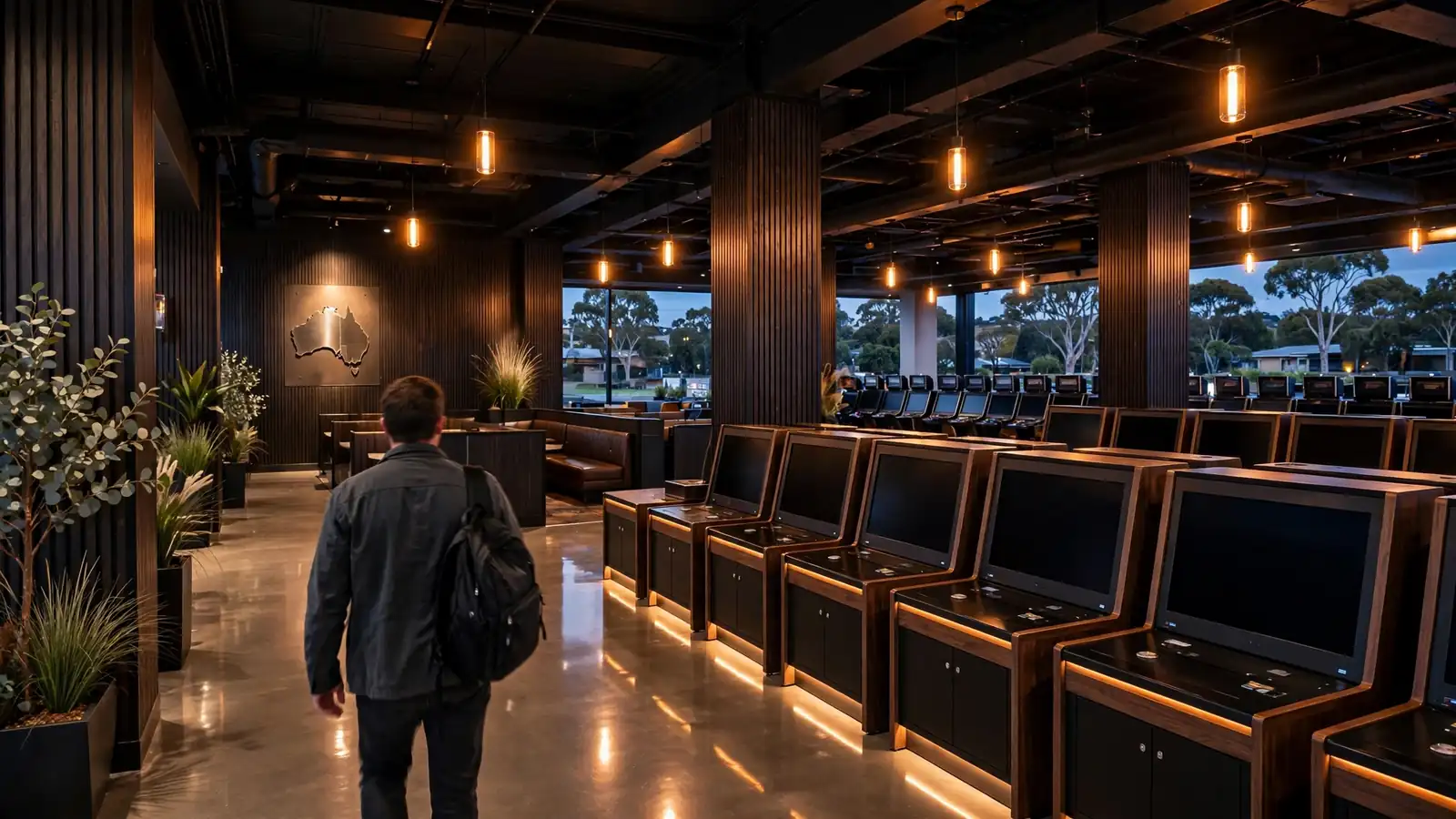

What to Check When Comparing Melbourne Pokies Venues
A “best” venue is not a useful label on its own. When I compare places, I look less for a grand claim and more for what I can confirm about the venue’s approach to player safety. That gives you a practical basis for choosing where to spend time, without pretending one room suits everyone.
Start with the responsible-gambling tools the venue makes available. Deposit limits can help you cap what you put in; loss limits and session time limits let you set boundaries around money lost or time spent. Self-exclusion is another option if you need a break from gambling at that venue. Before settling in, check how these tools are explained and where staff can direct you for help using them.
Then look at the way staff handle concerns. You can ask who to speak to if your play starts to feel difficult to manage, and whether the venue can explain its support options clearly. A calm, straightforward answer is more useful than a wall of polished promises. No tool can make gambling risk-free. Still, clear options matter.
Venue Safety Check
- Confirm if deposit, loss, and session-time limits are available
- Ask staff how to use the available limit tools
- Verify if self-exclusion is clearly explained
- Identify who to approach with a concern or if an RGO is on duty
- Check how the venue responds to signs of gambling harm
There is also a specific staffing requirement to understand. A report by regionriverina.com.au says that, from 1 July, a venue operating more than 20 pokies must have a dedicated responsible gambling officer (RGO) on duty while those machines are running. The report also describes a one-month grace period for venues to remove signage and bring in RGOs. These details concern qualifying venues; they do not mean every Melbourne venue has the same machine count or staffing arrangement. If this matters to your choice, ask the venue how it applies the requirement.
The same report says venues will need to keep a gambling incident register. It is intended to document incidents, including situations where a patron’s behaviour suggests they may be at risk of, or experiencing, gambling harm. That is a record-keeping requirement, not a promise that no harm will occur. You can ask how staff are trained to recognise concerns and what they do when someone appears to need support.
When comparing Melbourne pokies venues, keep your checklist simple:
- Are deposit, loss and session-time limits available, and can staff explain how to use them?
- Is self-exclusion clearly explained?
- Can you identify who to approach with a concern, including whether an RGO is on duty where the requirement applies?
- Does the venue describe how it responds to signs of gambling harm?
Those questions are more grounded than relying on a “best pokies venue” label. They also help you compare venues without assuming that a large selection of pokies, a particular atmosphere or a prominent location tells you anything about player support. I would make the call based on what the venue can explain plainly, not on a slogan.
If the answers are vague, that is useful information in itself. You can choose somewhere else, or decide not to play. Taking a pause is a valid choice; the machines will still be there.
What’s Verified About Pokies at Crown Melbourne
Crown Melbourne is a name many people associate with casino play, but a familiar name is not evidence of a particular pokie room, machine range or current machine availability. Those are details to confirm with Crown directly, rather than infer from a directory entry, an old photograph or someone’s account of a past visit.
I’d treat claims about Crown’s pokies as current only when they come from material that clearly identifies the venue and is recent enough to be useful. If you need a specific detail, ask Crown’s staff or check Crown’s own published information. A page that says little more than “pokies at Crown” may not answer whether the feature you have in mind is actually there.
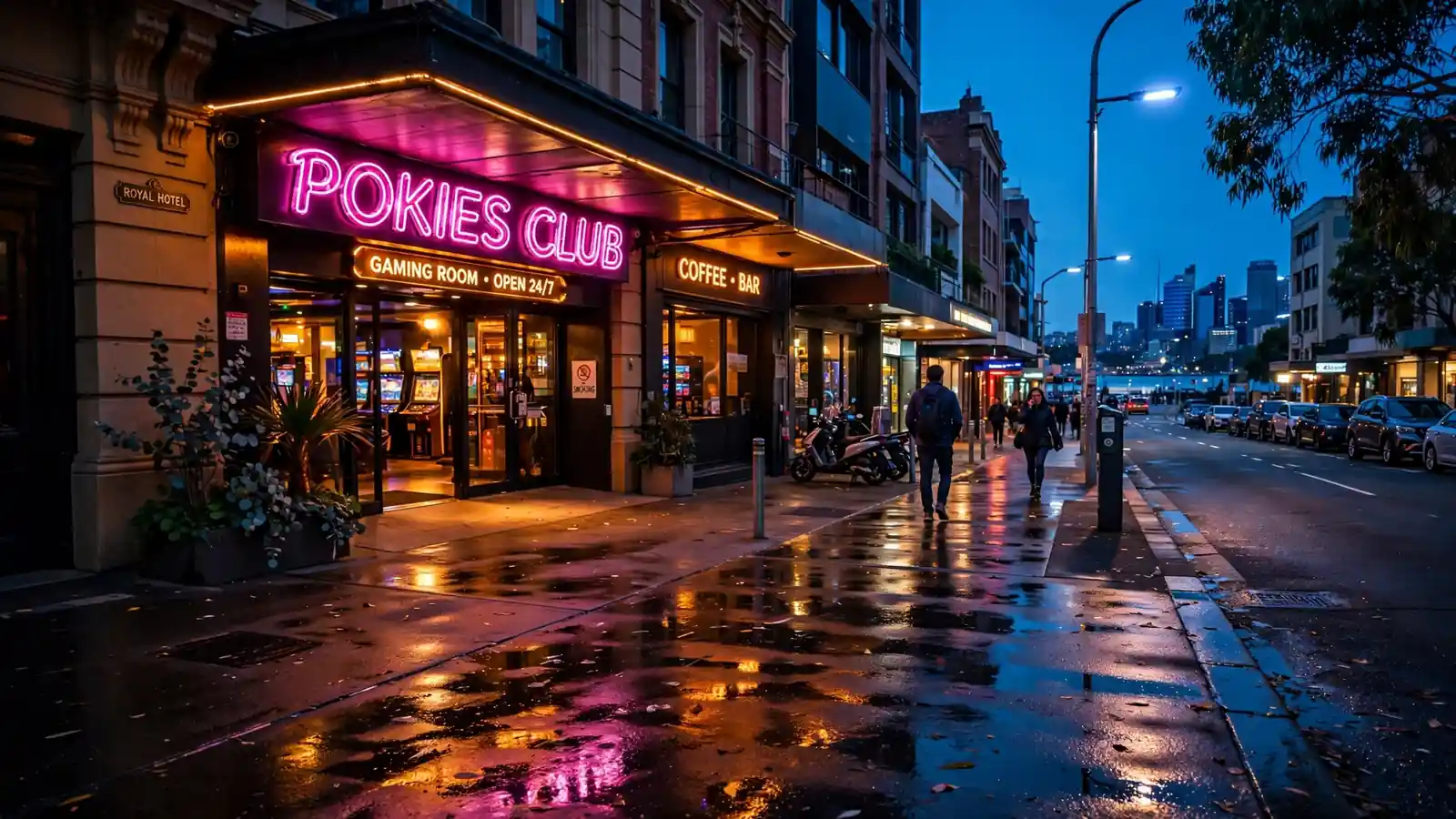

The same care applies to labels such as “best pokies room in Melbourne”. That is a judgement, not a measurable fact on its own. One person may mean a room that feels comfortable; another may be looking for a particular game or layout. Without a clear basis for the comparison, a confident ranking is just an opinion dressed up as a finding. Not much to go on.
I also separate general information about Melbourne venues from Crown-specific claims. Responsible-gambling tools such as deposit, loss and session-time limits, along with self-exclusion, are recognised tools in the Australian gambling context. But that does not establish which options Crown provides or how they are set up there. For a Crown-specific answer, check Crown’s own information or ask staff before relying on a general description.
If you’re visiting, make your question precise: ask about the particular facility or feature you care about, and whether it is available when you plan to attend. That is more useful than relying on a broad claim about “the pokies” as though every venue, room and machine were interchangeable.
Attention Do not rely on general Melbourne venue descriptions to confirm specific features or machine availability at Crown Melbourne; verify these details directly with Crown staff.
A search result can point you towards Crown Melbourne, but it cannot settle every practical detail. Keep the distinction simple: general Melbourne venue information helps you know what to ask; a Crown-specific answer needs to identify Crown and address the detail you actually need. I’d rather make that check than build a plan around a vague recommendation.
Online Pokies and Cashless Play: Know the Australian Limits
Searching for online pokies from Melbourne can blur two different things: whether a site is reachable and whether an operator may legally offer its games here. Under the Interactive Gambling Act 2001, companies cannot provide real-money online pokies to people in Australia without a domestic licence. No Australian online casino licences have been issued, so there is no locally licensed online casino.
That does not mean the law makes an individual player the target. It is directed at operators, not players. But offshore sites may still accept Australians, and the Australian Communications and Media Authority (ACMA) blocks access to illegal offshore gambling sites. A site appearing in a search or loading on your device is not proof that it is lawful, locally licensed or able to offer you protection. Reachability is not a green light.
The practical risk matters most when money is involved. If an offshore casino refuses to pay winnings, Australian players have no legal recourse in Australia against it. You may be left trying to resolve a dispute with a business outside the Australian system. That is a poor position to discover only after a withdrawal problem.
Cashless play does not change that picture. PayID is a transfer service built into Australia’s New Payments Platform, but using PayID—or any other payment method—does not make an online casino licensed or turn prohibited services into lawful ones. Nor does a payment option prove that a site is fair or transparent about its games. Payment convenience and legal protection are separate questions.
Before dealing with any offshore site, consider the risk of losing access to funds or being unable to recover winnings. If you have already chosen to interact with one, check its identity and address verification requirements before your first withdrawal; being asked for documents later can delay or complicate the process. Do not treat a familiar payment logo as a safeguard. It is not one.
BetStop has a specific limit: it applies to Australian-licensed operators and does not bind offshore sites. It should not be relied on to block access to an offshore gambling service. The safer takeaway is straightforward: real-money online pokies are not offered through an Australian-licensed casino, and an offshore operator’s willingness to take a deposit does not give you Australian recourse if it fails to pay. That distinction is easy to miss. Costly, too.
Late-Night Play and Venue Machine Hours
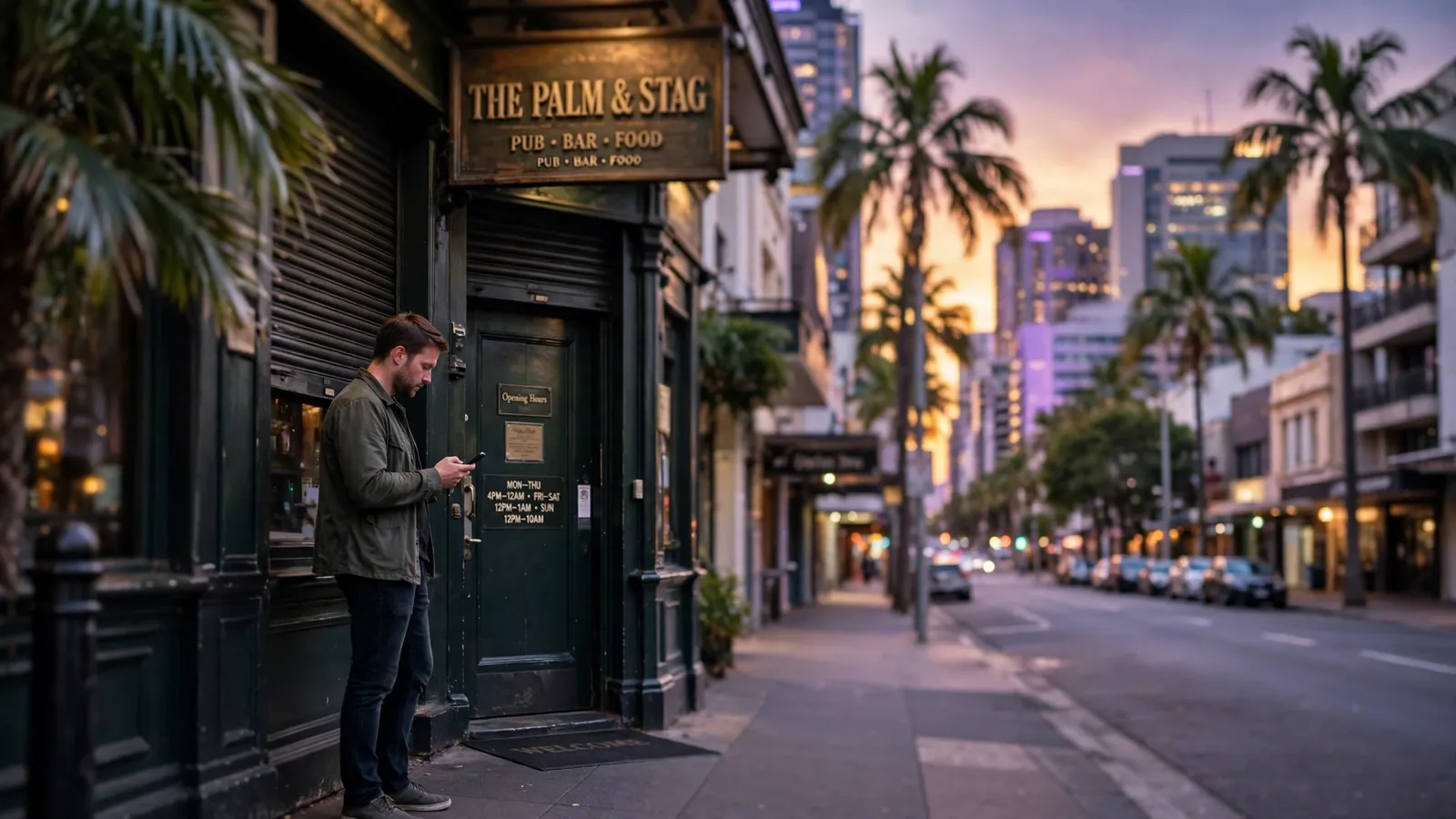
A venue’s doors being open late does not automatically mean its pokies are available for play throughout that time. Food, drinks or other facilities may have different operating hours from the gaming area, so a late closing time alone does not answer when machines are running. Treat those as separate details when planning a late visit.
Gaming area vs venue hours
A venue’s general opening hours may include food and drink services that operate on a different schedule than the gaming machines. Always confirm the specific machine operating hours if you are planning a late-night visit.
That distinction matters if you are looking for a Melbourne venue open around the clock. “Open” can describe the venue generally; it is not a promise that the gaming area is operating at every hour. Check the information for the specific venue and, if the machine hours are unclear, contact it before making the trip. A listing that gives only a closing time may not settle the question.
There is also a staff requirement tied specifically to machine operation. A report by regionriverina.com.au says that, from 1 July, a venue operating more than 20 gaming machines is required to have a dedicated responsible gambling officer (RGO) on duty while those machines are running. In practical terms, the requirement is linked to the operating period for the machines, not simply to whether the venue’s doors are open.
That is useful context for a late-night visit, but it does not establish the hours of any particular Melbourne venue. Nor does it mean that every venue has the same arrangements. The key detail is whether the machines are operating at the time you plan to go, rather than whether the venue is described as open late.
I would keep those questions separate: venue hours, gaming-area hours and machine operation. If you are travelling across town late, confirm the specific detail you need instead of relying on a broad “open” label. It saves a wasted trip.
Finding Venues Across Melbourne’s East and West
Melbourne’s east and west cover a lot of ground, so a suburb name is a starting point, not a venue recommendation. I’d pin down the actual address before setting off: broad labels such as “eastern suburbs” or “western suburbs” can cover places with very different travel routes. A map result can help you narrow the area, but it doesn’t establish what facilities a particular venue has.
The same applies if you’re looking around the south-east. Decide how far from central Melbourne you’re prepared to travel, then check each candidate’s address against your route. Don’t assume that a result described as “Melbourne” is close to the city centre; listings can use the metropolitan name loosely.
St Kilda is a recognisable destination, but that alone tells you nothing about whether a specific venue has pokies. Check the venue itself rather than treating the suburb as proof. I’d also be cautious with broad “best pokies” claims attached to a place name: a location label doesn’t verify the machines, their settings or what is available at the venue.
One search phrase that can cause confusion is “Newcastle Melbourne”. Newcastle is a separate city, not a Melbourne district. If that is where you mean to go, check Newcastle separately; if you mean a Melbourne suburb or venue, use its full name and address. Mixing the two is a good way to plan the wrong trip.
And if you’re looking for a maximum bet, the suburb won’t answer that either. It’s a detail to verify for the particular machine and venue, not something you can infer from an east-or-west label.
Legal Risk
Real-money online pokies are not offered through Australian-licensed casinos. Using offshore sites means you have no legal recourse in Australia if the operator refuses to pay winnings.
A practical shortlist needs only a few checks: the exact address, whether it matches the part of Melbourne you intend to visit, and whether the venue itself confirms the facilities you’re seeking. I wouldn’t treat a map pin, directory snippet or area-wide description as confirmation. That little pause can save a needless detour.
Pokies in Melbourne’s CBD: What You Can Confirm
A central-city address does not tell you whether a particular club has pokies, how many machines it has, or what is available on the day. I’d treat a venue name or a map pin as a starting point, not confirmation. Check the venue’s own current information, then contact it directly if the detail matters before you make the trip.
The same goes for claims about the “best” pokies in the CBD. A venue label cannot establish that its machines pay better, and a machine’s published return, where available, is not a promise about what you will receive in a session. Each spin is an independent random event. A confident ranking without clear, relevant evidence is just a ranking.
If you are looking at a club, confirm that it is a genuine venue and that its information is current. Don’t assume that every club in central Melbourne has gaming machines, or infer machine numbers from a directory entry. Those details need to come from the venue itself or another reliable, up-to-date record.
If you want to exclude yourself from pokies, ask the venue what process it offers and what steps you need to take. Self-exclusion is a responsible-gambling tool, alongside options such as deposit, loss and session-time limits. Check how the arrangement works before relying on it; don’t assume one venue’s process automatically applies elsewhere.
BetStop is different: it applies to Australian-licensed operators and does not bind offshore sites. It is not a substitute for asking a physical venue about its own exclusion process. Keep the distinction clear.
For a CBD visit, the practical checklist is simple: confirm the venue and its current details directly, ask about the specific support or exclusion option you need, and avoid treating promotional language as proof of machine quality. You can make a better-informed choice without pretending there is a verified league table of Melbourne clubs. Dry, but useful.
North and South Melbourne Searches
If you’re looking north or south of the city centre, start with the exact suburb you mean rather than treating “north” or “south” as a precise location. North Melbourne and South Melbourne are distinct suburb names; a broad directional label can bring up places beyond the area you have in mind.
I’d use a map to narrow the area, then check each candidate’s own information before setting out. Confirm the street address and whether the venue actually has pokies. A venue listing or map pin can help you find a place, but it doesn’t establish what facilities are available there. If that detail matters, contact the venue directly.
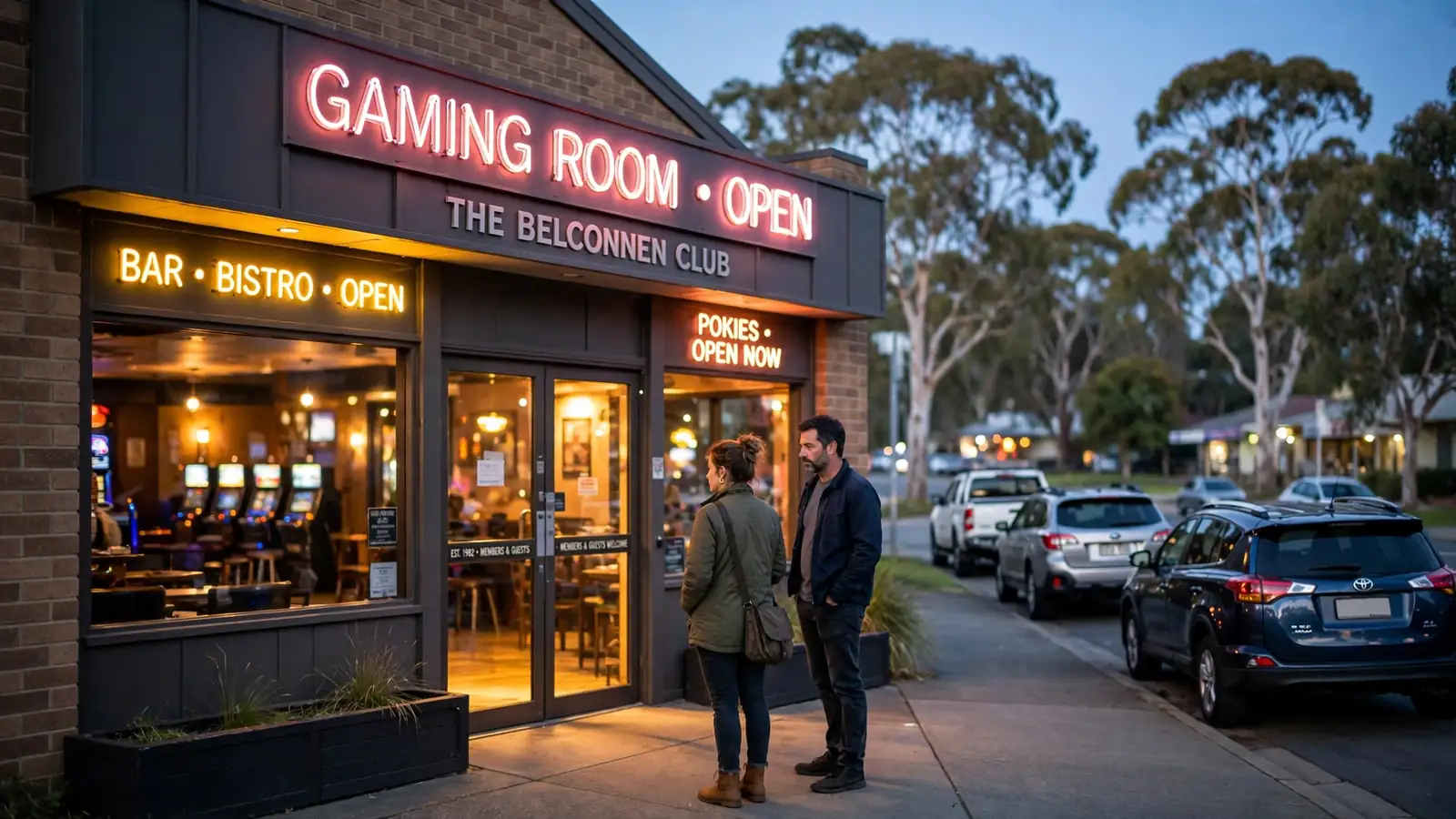
The same applies when comparing results for North Melbourne or South Melbourne: don’t assume that a result is nearby just because the suburb appears in its name or description. Check the address against your starting point and decide whether the trip suits you. That small check can save a detour.
If you’re using a broad search for pokies north of the centre, narrow it by the suburb or area you’re willing to travel to. For South Melbourne, do the same rather than relying on a city-wide label. I wouldn’t treat either phrase as a confirmed directory of venues. Search results change, and a familiar name is not proof that a particular venue offers pokies.
Keep the final check simple: exact address, venue’s own details, and confirmation of the pokies themselves. No guesswork needed.
How do I know if an online casino is safe to play at?
There is no Australian-licensed online casino, and you have no legal recourse in Australia if an offshore casino refuses to pay your winnings. ACMA blocks access to illegal offshore gambling sites, so playing with an offshore operator carries risks.
Are online pokies legal for Australian players?
Yes, Australians can legally play on offshore sites that accept them, but companies cannot legally offer real-money online pokies to Australians without a domestic licence, and no such licences have been issued.
Do PayID deposits qualify for bonuses?
Yes, PayID is treated like any other qualifying deposit method at the recommended sites.
What is the legal age for online gambling in Australia?
You must be at least 18 years old to gamble online in Australia.
Created by the ”Wildfortunecaasino.net” editorial team.